Barnabas Lee: By the Power of Your Name
Generative AI cover art for an independent musician. A project about knowing where AI accelerates the work and where craft has to take over.
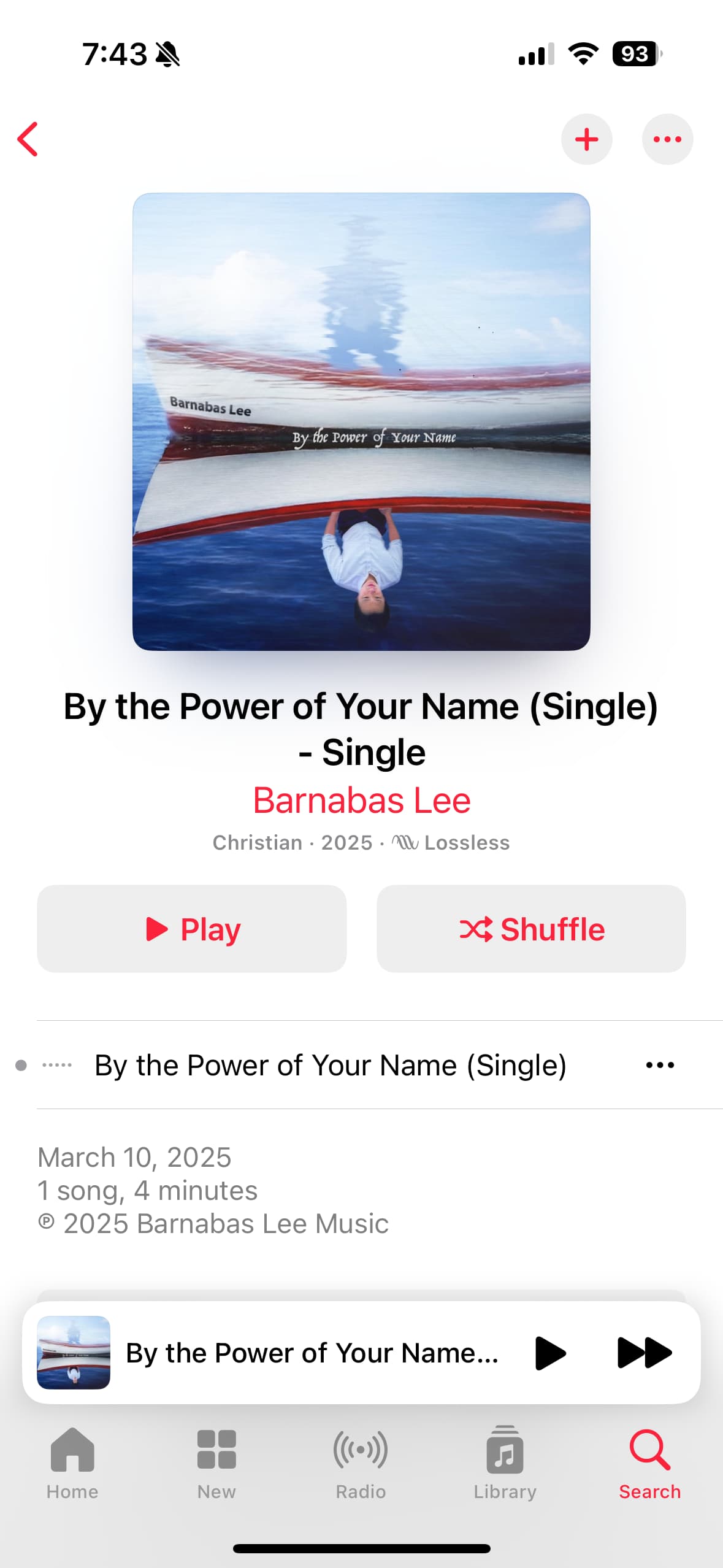
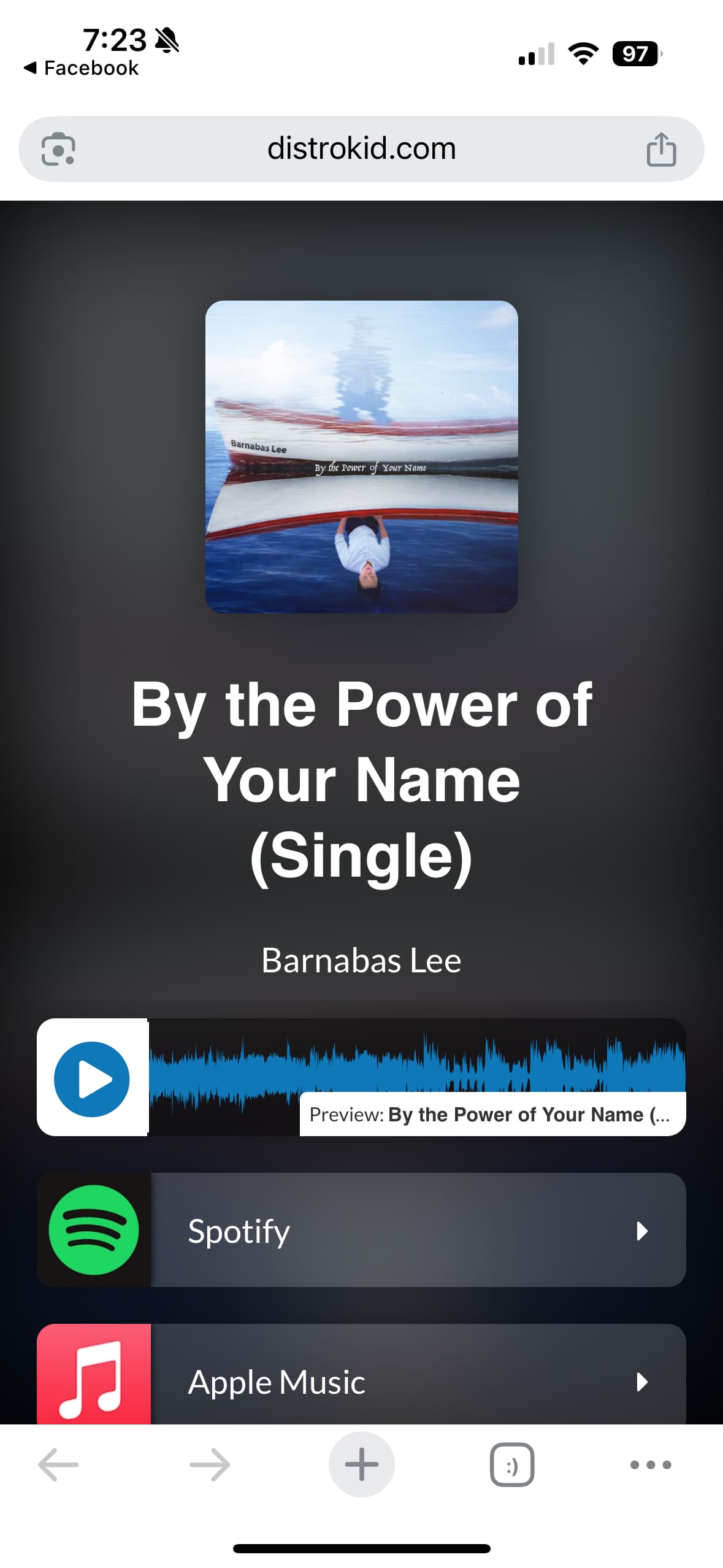
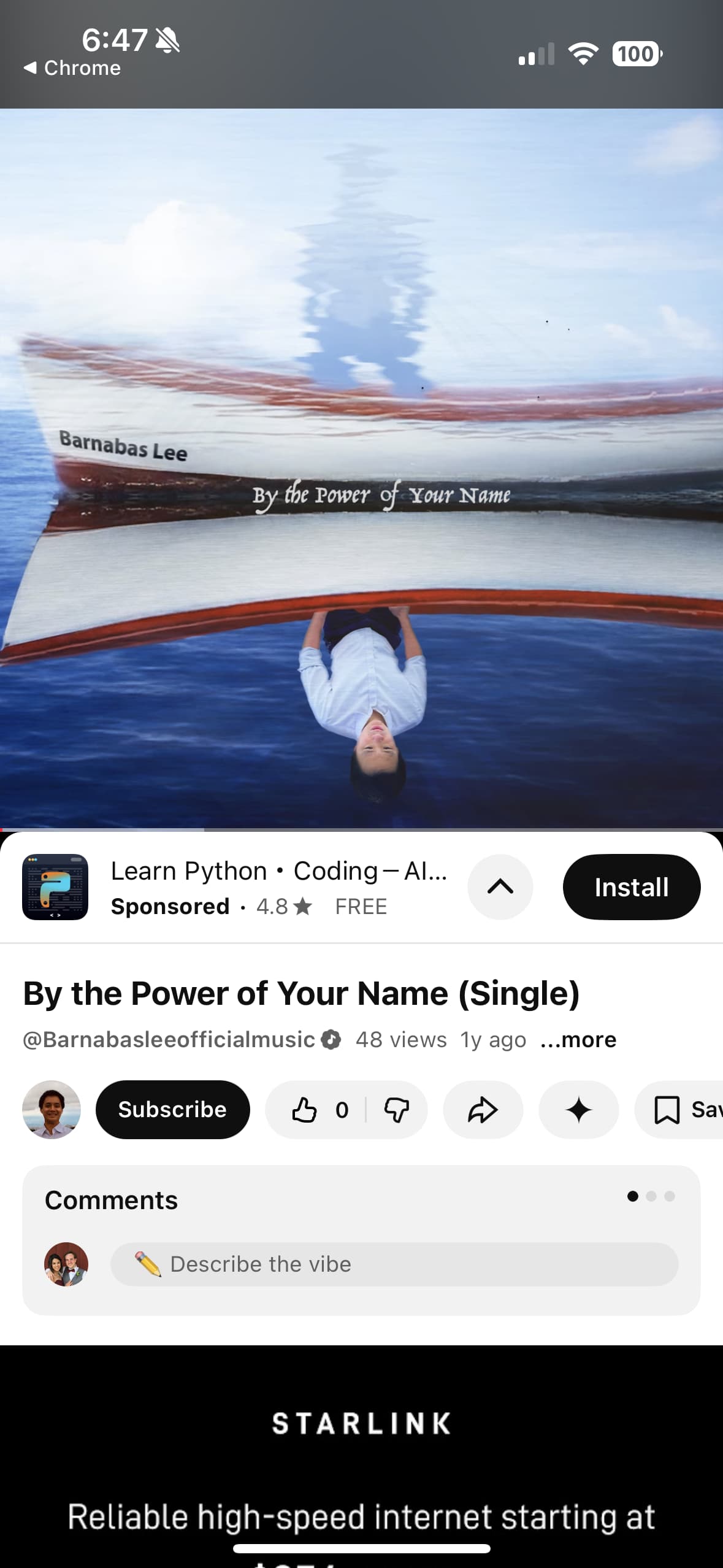
- Role
- Art Direction, Generative AI Production, Compositing
- Timeline
- 2025
- Client
- Barnabas Lee (independent musician)
- Deliverables
- Single cover art, streaming platform assets, social variants, merchandise
A reflection turned upside down.
Barnabas Lee is an independent musician whose work explores themes of self-reflection and identity. For “By the Power of Your Name,” he came to me with a vision rooted in self-discovery, originally imagined as someone fishing for himself, and a need for cover art that could carry the song across streaming platforms, social channels, and merchandise.
The concept didn't arrive fully formed. It evolved across our conversations. What started as an illustrative idea, a figure fishing for himself, shifted into something more cinematic and surreal: a photorealistic moment of him peering at his own reflection in the water, with the visual logic inverted. The boat, the figure, and the cast shadow appear in the sky. The reflection lives in the world.
That kind of conceptual inversion isn't something generative AI can execute on its own. But it's the kind of work AI can accelerate when paired with the right craft.
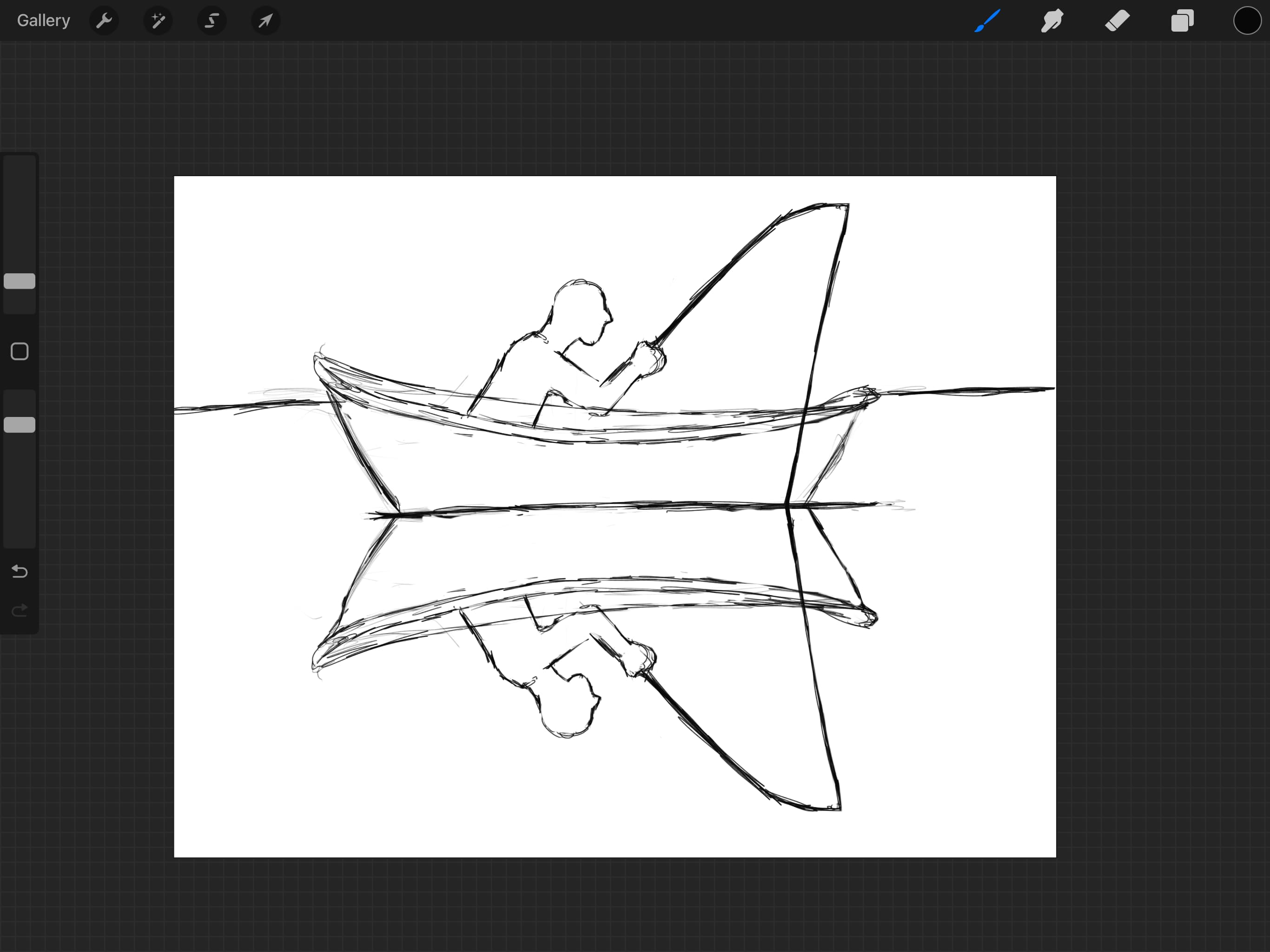
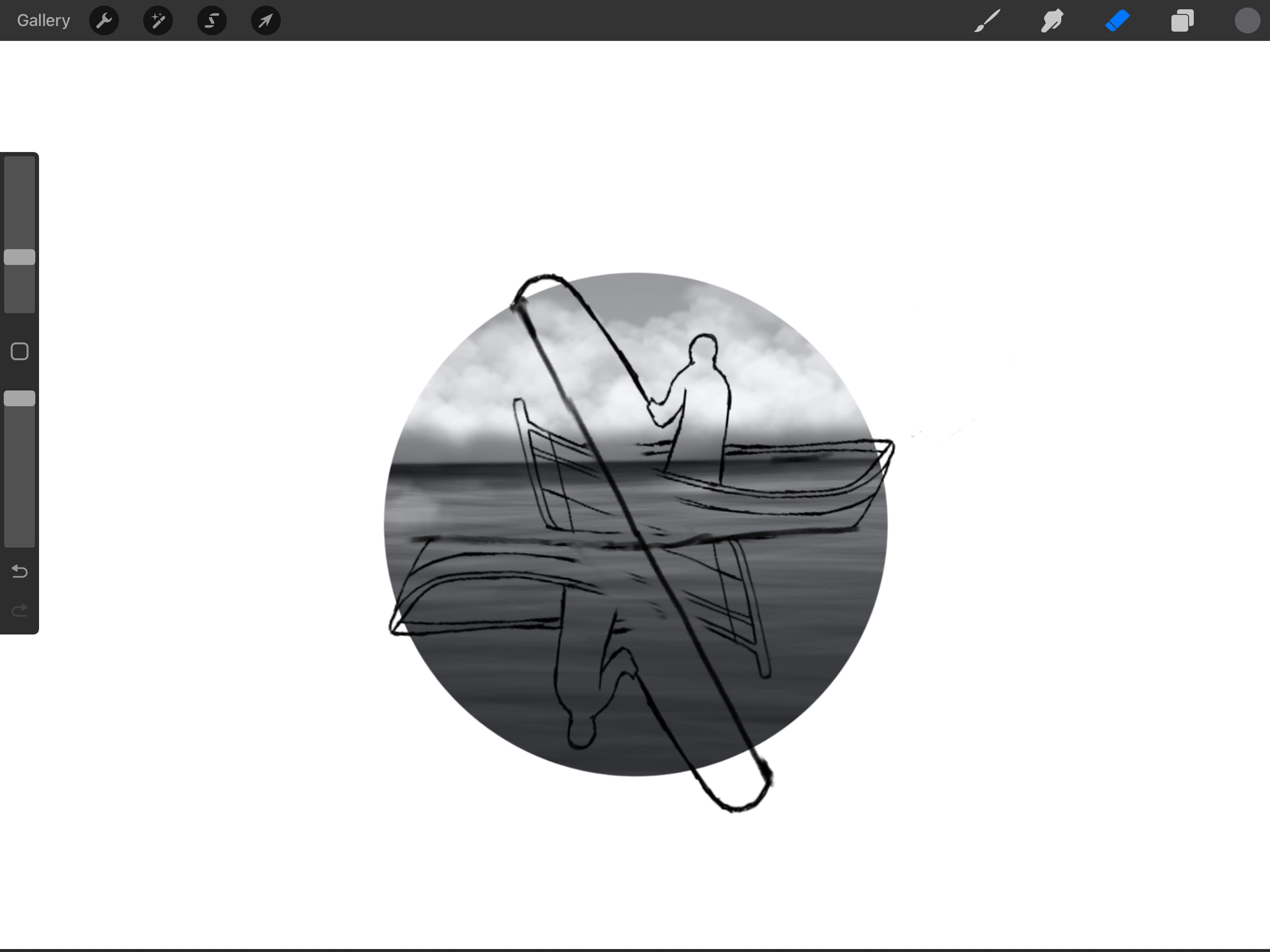
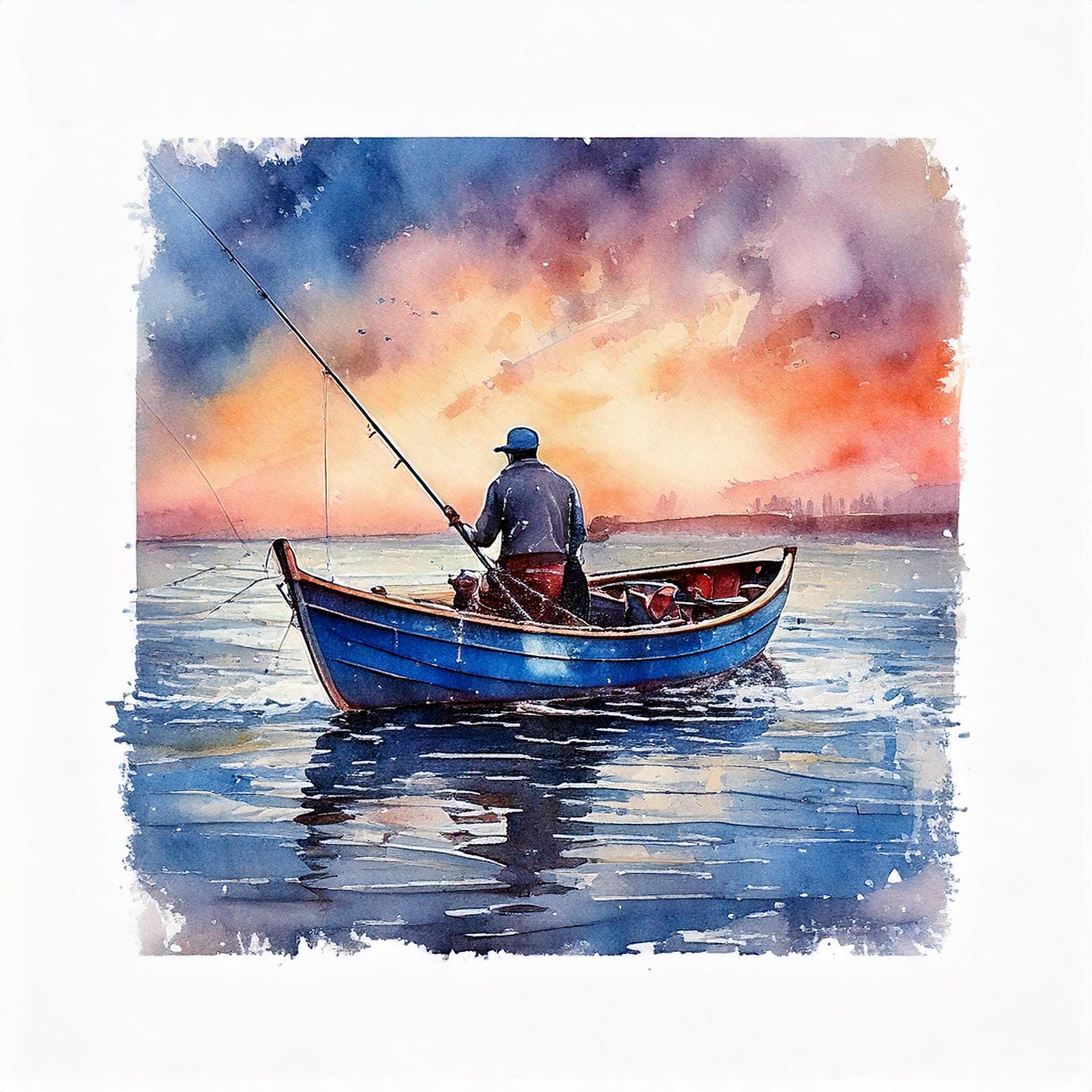
From early sketches through stylistic references, the concept evolved from illustrative to cinematic
The workflow, in four layers.
The production combined four layers, each doing different work.
Generative AI tooling
Adobe Firefly and Photoshop’s generative AI tools served as the primary asset generation engine, used both for early illustrative exploration and for photorealistic source material: boats, ocean environments, atmospheric lighting references.
Reference-driven prompt strategy
Rather than relying on text prompts alone, the process used a curated reference set drawn from a real photoshoot with the artist combined with real and AI-generated environmental references. We tested and iterated prompts across distinct visual styles to narrow the stylistic direction quickly.
Conceptual compositing
The inverted reflection, sky as water, water as sky, was engineered by hand in Photoshop. AI generated the components. The conceptual integrity was built in compositing, with manual control over lighting consistency, color temperature, and the atmospheric treatment that signals “reflection” rather than just “inverted image.”
Iterative client direction
Three to four review rounds shaped the final, each one refining the inversion concept, the typography placement (his name on the boat, ultimately top-only for legibility), and the balance between photorealism and the ethereal quality the song called for.
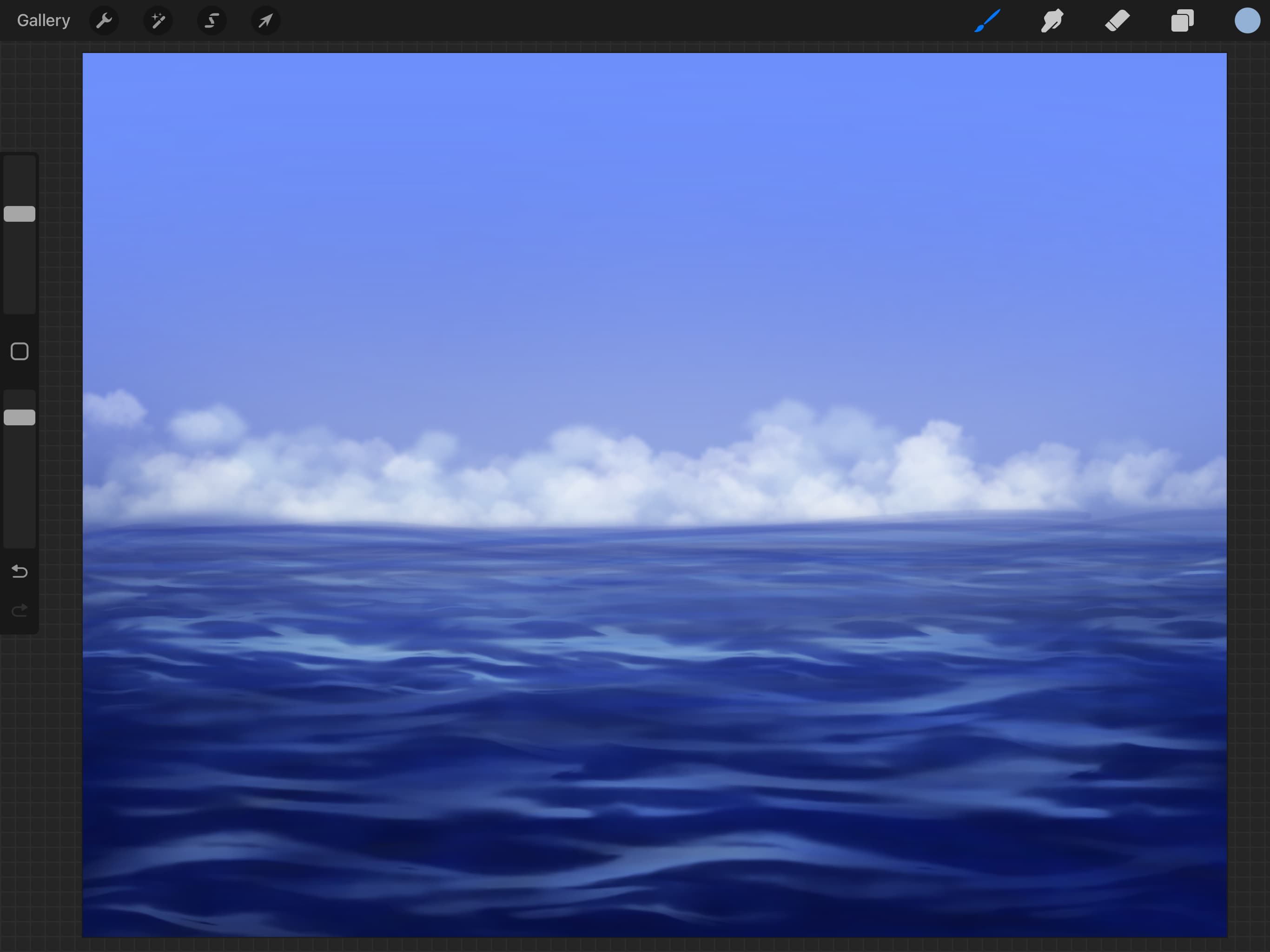
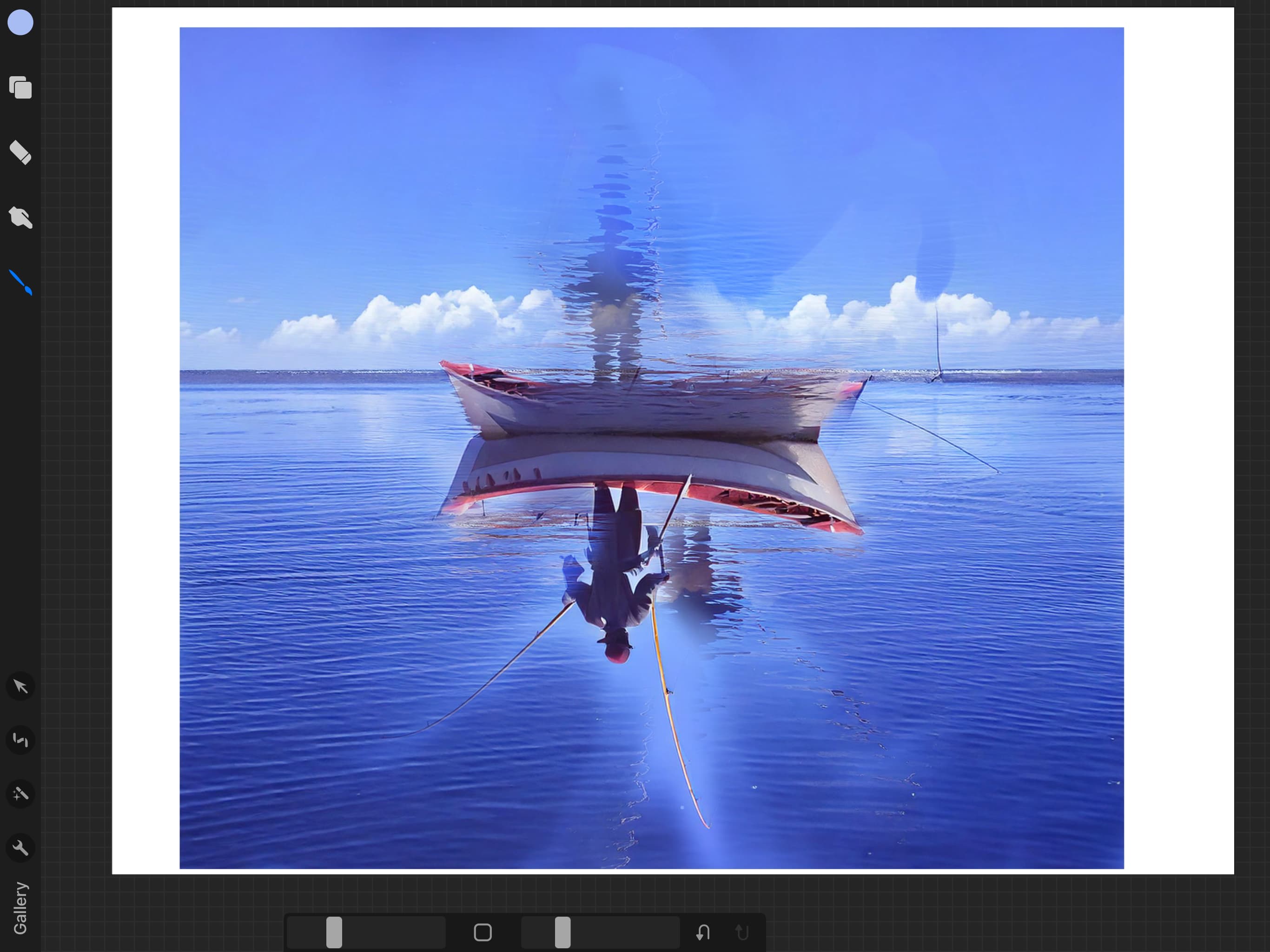
From digital sketches through AI-generated environments to the composited inversion
What AI did. What craft did.
Production-grade AI work isn't about getting the tools to do everything. It's about knowing where they accelerate and where they fall short, and designing the workflow accordingly.
- •Rapid stylistic exploration during early concept rounds
- •Photorealistic source material at indie-budget speed
- •Environmental and atmospheric references the photoshoot couldn’t capture
- •Texture, lighting, and detail work across components
- •The conceptual inversion that defines the piece
- •Lighting and color consistency across composited elements
- •The reflection-not-inversion treatment in the sky
- •Typography integration on a non-flat AI-generated surface
- •Brand judgment when AI output drifted from the artist’s vision
- •Client iteration management across an evolving creative direction
AI generated raw materials at speed. The conceptual integrity, the compositing, and the brand judgment were entirely human craft.
Four failure modes, and how I designed around them.
The interesting work in AI production isn't getting the tools to do more. It's recognizing where they fail and building a workflow that compensates.
Brand drift across sessions
The issue: Even with consistent reference sets, AI generation produced subtly different lighting and color temperatures across iterations.
The fix: Stop trying to prompt for consistency. Move consistency work into post-production color and lighting unification.
Concept rigidity
The issue: AI couldn’t execute the sky-as-reflection inversion as a single composition.
The fix: Generate components separately. Composite by hand.
Reflection physics
The issue: AI didn’t understand the sky needed to behave as a reflection. It produced realistic skies or cleanly inverted boats, neither of which read correctly to the eye.
The fix: Manually engineer the haze, distortion, and color treatment that lets the eye accept the inversion.
Typography on AI surfaces
The issue: AI-generated boat surfaces lack stable geometry for clean type placement.
The fix: Stabilize the surface in Photoshop before placing type.
The output.
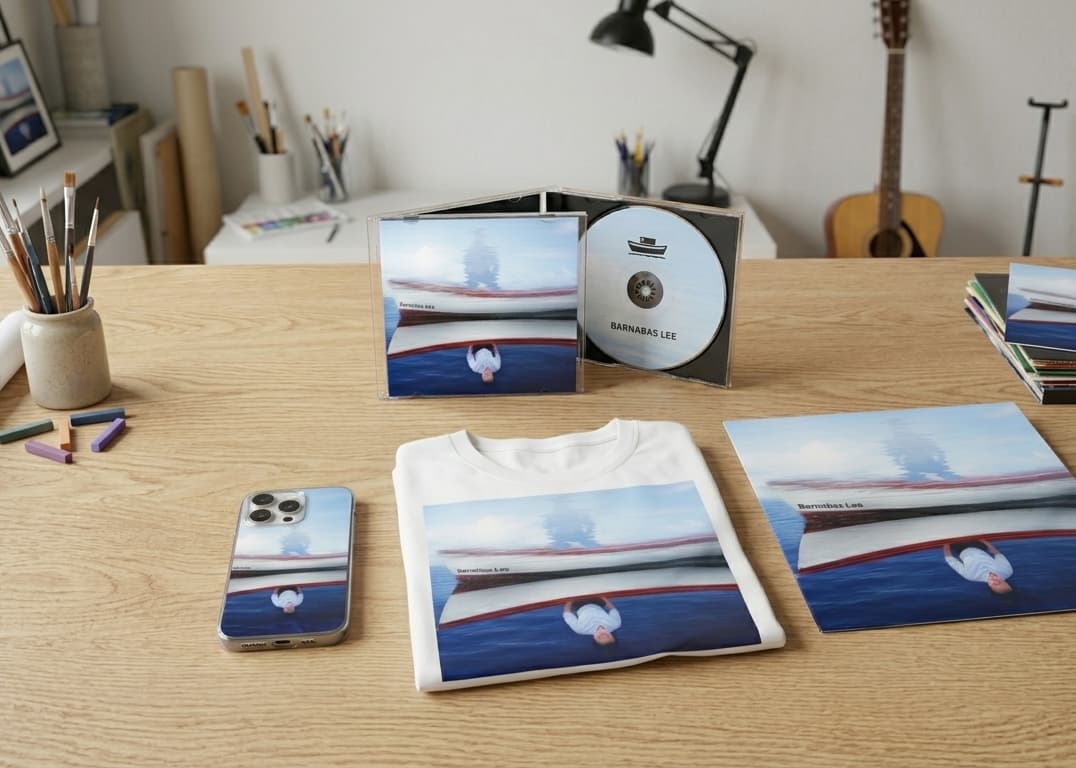
The final artwork rewards a second look. The viewer first registers a figure looking down at calm water. Then the inversion lands: the boat and shadow are above, in the sky, behaving like a reflection. The artist's name, set quietly on the boat, stays legible despite the inversion. The piece rolled out across streaming platforms, social channels, and merchandise, with the t-shirt as the physical centerpiece of the launch.
What this work taught me.
Album artwork for an independent artist is a small canvas with disproportionate emotional weight. It carries a song's identity across every place a listener encounters it, from a streaming thumbnail to a t-shirt at a show.
AI made it possible to deliver this conceptual ambition at a budget that wouldn't have supported a traditional studio production. But the tools didn't make the work. Craft did. AI was the medium. The inversion, the compositing, and the trust we built across iterations were the work.